The Forest Paradox: Which Came First, the Seed or the Plant?
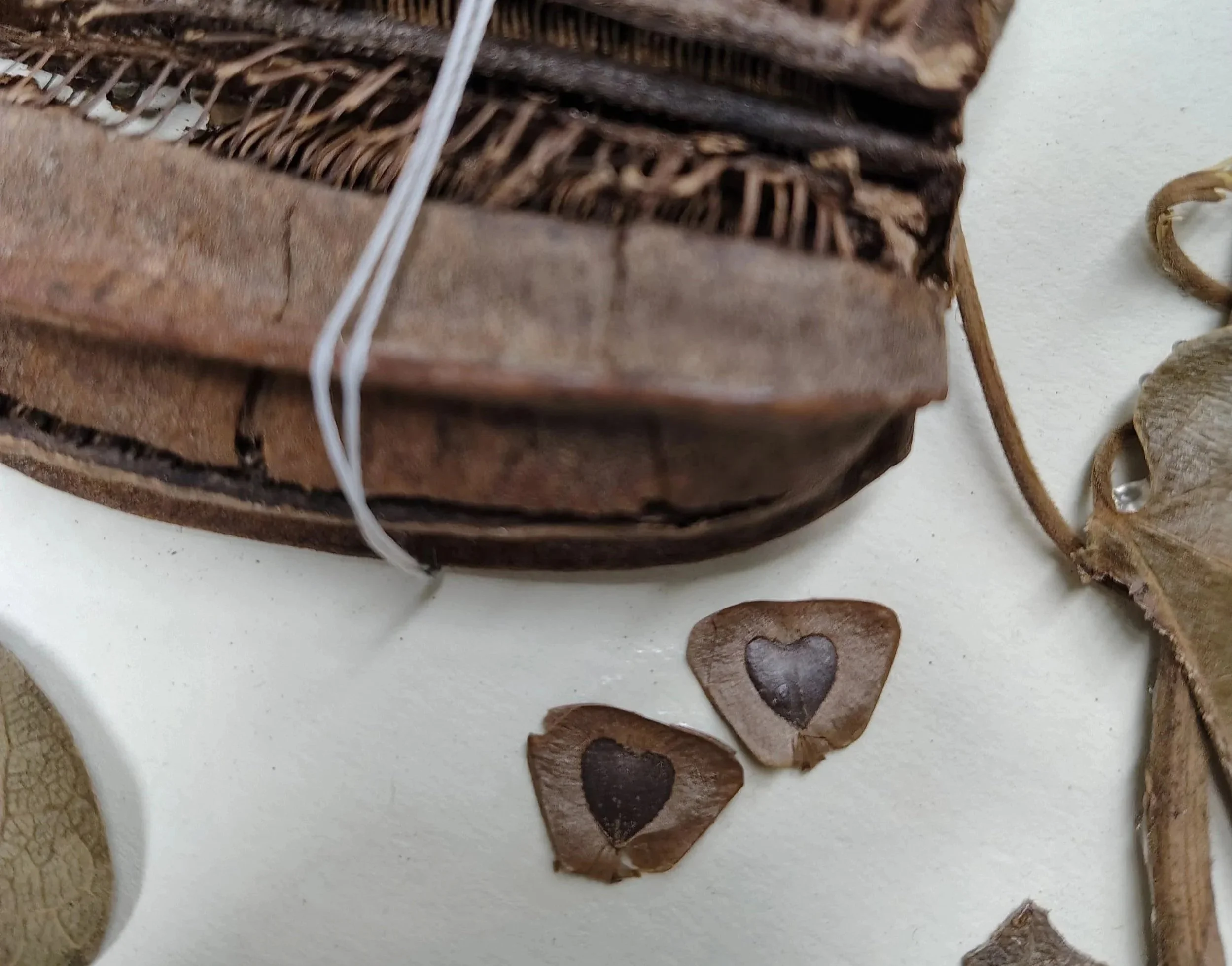
Aristolochia sp. (Aristolochiaceae) — NYBG Herbarium specimen
Forget the paradox! Science settled this debate long time ago: the plant came first. Fossil records show that the first plants appeared around 470 million years ago. While those early pioneer plants reproduced via spores—simple, unicellular structures—the complex, multicellular seed didn't evolve until about 150 million years later with the rise of seed-bearing plants. Yet, the beauty of this resolved mystery lies in the closed cycle it creates, constantly restarting the engine of life and maintaining our global ecosystems.
Forests are vital to the global carbon flux, sequestering vast amounts of CO2 and maintaining the biogeochemical cycles that support life on Earth. While seeds are essential for human life, they play an even more fundamental role in forest preservation. Beyond carrying the genetic information for new life, seeds provide plants with their only opportunity for movement during their life[1]. Through seed dispersal, species can alter their distributional range, escape competition and natural enemies near the parent plant, and find ideal conditions for germination[2]. This mobility allows forests to expand and recover after disturbances, making seed dispersal the critical link that keeps these massive ecosystems resilient.
Dispersal syndromes rely on different agents that carry seeds far and wide, including wind, water, gravity, animals, and other rare, fascinating mechanisms like explosive fruits that launch their seeds several meters away[3]. The dominance of these syndromes shifts beautifully during forest recovery, given the environmental and landscape conditions[4]. In the early stages, where the landscape is mainly open grassland and isolated trees, wind dispersal dominates because of the lack of canopy cover for animals. Here, adventurous birds, but primarily bat species, play a pioneering role, transporting seeds between the isolated trees and creating “vegetation islands” under their canopies[5,6]. As shrub and tree cover increase, more animal species move in, finding perches and refuge. These animals bring a wider variety of seeds, accelerating the forest recovery. Thus, there is a species turnover from wind-dispersed species to frugivore-dispersed species: the role of wind diminishes as animal dispersal takes over—primarily, mammal and bird dispersal.
While changes in the dispersal mechanisms over time are well-documented, they remain understudied in the context of climate change—leaving a significant knowledge gap in the process that determines the future of our forests. Recently, my collaborators and I found evidence that climate change is disrupting this natural recovery. We are still exploring the new environmental scenarios, but observations suggest that shifting climates favor drought tolerant species[7], usually wind-dispersed, likely halting the transition to more diverse, animal-dispersed ecosystems. Furthermore, declining animal populations are breaking the links between plants and their dispersal agents[2]. Plant germination and seed production are also declining, except for lianas or drought tolerant plants[8]. Understanding these climate-driven effects on seeds and their dispersal is critical for developing effective forest management strategies.
Circling back to our initial paradox, which came first, the seeds or the plants, we can now update the question for the modern era: Does forest recovery dictate the composition of dispersal syndromes, or do the dispersal syndromes drive forest recovery? This 'chicken-and-egg' dynamic suggests that key plant characteristics—or life history traits—such as seed dispersal mechanisms, shape the forest recovery trajectory. These traits grant a competitive advantage to certain species under specific ecological conditions, allowing them to 'win' their spot in the future forest[9]. The real challenge is understanding which species will emerge, how they will do it, and why.
In short, seeds are at the heart of forest conservation. They are the calyx containing the “mana” that allows forests to “dream” of colonizing new lands, keeping the Earth functioning and guaranteeing human wellbeing through the vital goods and services they provide. My call to action is to appreciate the intricate interconnection between seeds, plants, and ecosystems. By reconnecting with incredible yet overlooked processes like seed dispersal, we can better understand why protecting every species is essential for forest conservation and, ultimately, for the preservation of our own.
References:
1. Beckman, N. G. & Sullivan, L. L. The Causes and Consequences of Seed Dispersal. Annual Review of Ecology, Evolution, and Systematics 54, 403–427 (2023).
2. Mendes, S. B. et al. Evidence of a European seed dispersal crisis | Science. Science 386, 6718 (2024).
3. From a Leaf to Our Food: Seed Dispersal is the Life Key (https://www.pablolopez-bustamante.com/tropicologyink/from-a-leaf-to-our-food#:~:text=Plant%20species%2C%20like,and%20explosion%27))
4. Dent, D. H. & Estrada-Villegas, S. Uniting niche differentiation and dispersal limitation predicts tropical forest succession. Trends in Ecology & Evolution 36, 700–708 (2021).
5. Holl, K. D. Factors Limiting Tropical Rain Forest Regeneration in Abandoned Pasture: Seed Rain, Seed Germination, Microclimate, and Soil. Biotropica 31, 229–242 (1999).
6. Holl, K. D., Zahawi, R. A., Cole, R. J., Ostertag, R. & Cordell, S. Planting Seedlings in Tree Islands Versus Plantations as a Large-Scale Tropical Forest Restoration Strategy. Restoration Ecology 19, 470–479 (2011).
7. Swenson, N. G., Hulshof, C. M., Katabuchi, M. & Enquist, B. J. Long-term shifts in the functional composition and diversity of a tropical dry forest: a 30-yr study. Ecological Monographs 90, e01408 (2020).
8. O’Brien, M. J., Peréz-Aviles, D. & Powers, J. S. Resilience of seed production to a severe El Niño-induced drought across functional groups and dispersal types. Global Change Biology 24, 5270–5280 (2018).
9. Pacala, S. W. & Rees, M. Models Suggesting Field Experiments to Test Two Hypotheses Explaining Successional Diversity. The American Naturalist 152, 729–737 (1998).
