Eco-Evolutionary Secrets
Deciphering the forces shaping tropical dry forests
My work explores the spatiotemporal variability of functional diversity of tropical dry forests and their conservation implications. Specifically, it is motivated by a fundamental question: How do tropical dry forest species move, survive, and adapt across spatial scales? An initial observation that larger-seeded species tend to dominate Caribbean dry forests prompted deeper eco-evolutionary questions. These questions led to the definition of two main projects. In particular, one project evaluates the macroecological dominance of certain dispersal strategies, while the other assesses how these strategies change over time at the local scale. These projects offer key insights into the tropical dry forest dynamics at different scales, revealing the processes that have shaped its distinctive spatial structure and diversity patterns.

Unveiling Dispersal Mechanisms in Neotropical Dry Forests
This project quantifies seed dispersal across continental and Caribbean dry forests. Conducted under the direction of Dr. Catherine Hulshof, in collaboration with Dr. Janet Franklin and Dr. Martin Dovciak, this research revisits Gentry and Janzen’s overlooked observation that continental dry forests are primarily wind-dispersed, whereas insular ones are predominantly bird-dispersed. This is particularly important amid the increasing prevalence of non-native, wind-dispersed species and the simultaneous decline in populations of migrating birds across the region.
-
![]()
1. Functional similarity
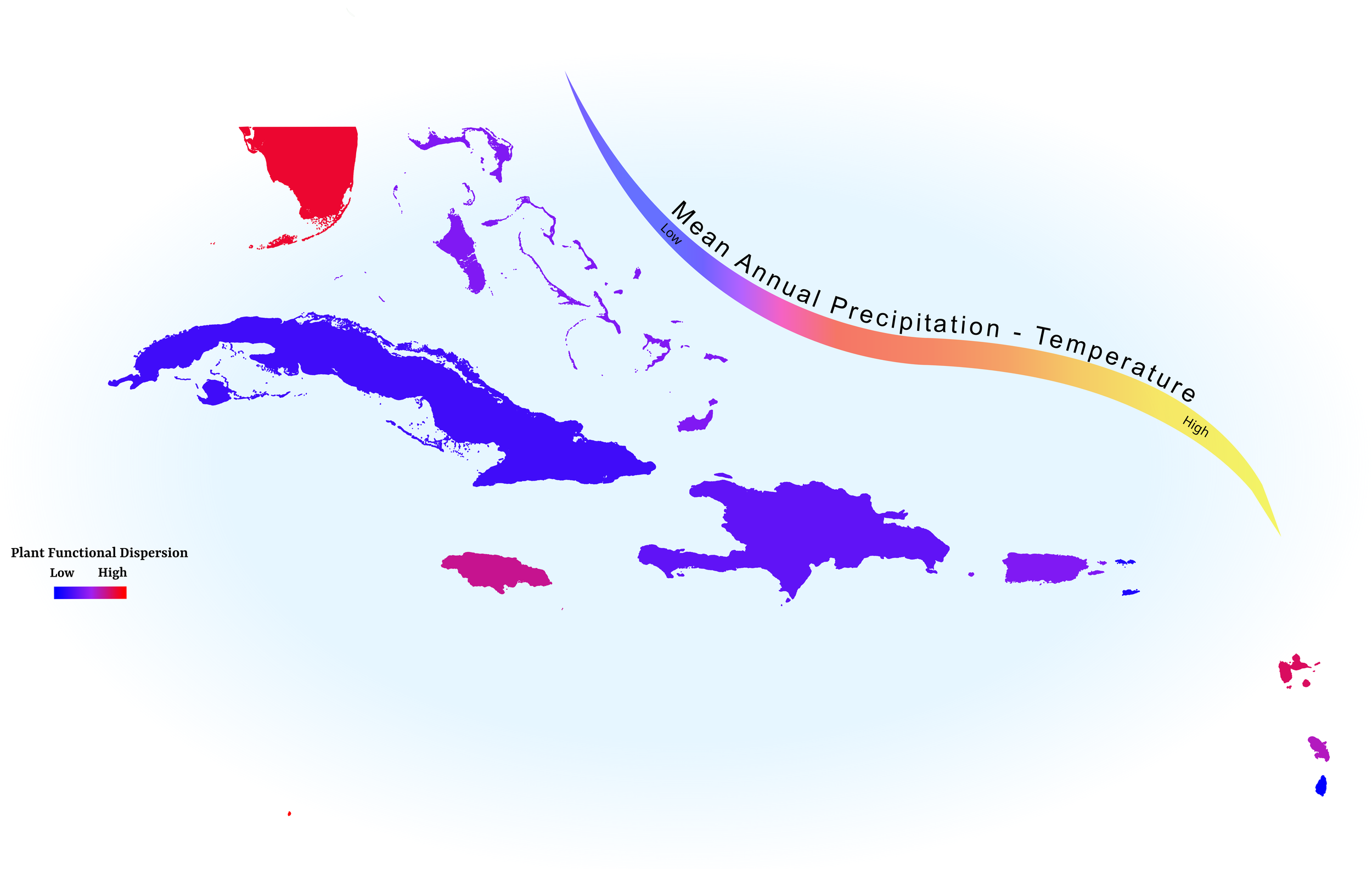
I found that, despite occurring in climatically distinct regions, Caribbean tropical dry forests are functionally similar.
-
![]()
2. High seed mass
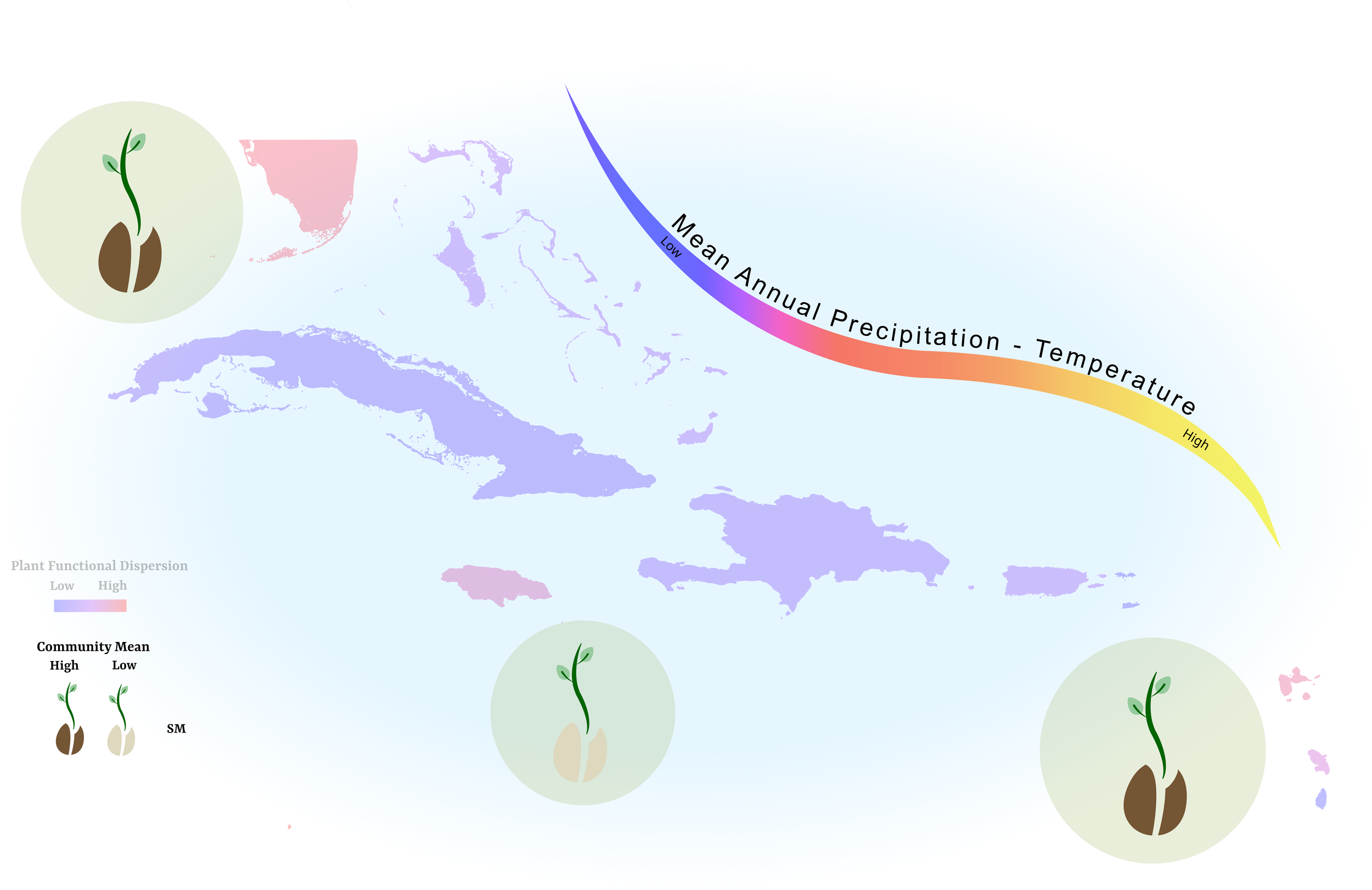
Notably, their flora is dominated by species with significantly higher seed mass values compared to continental dry forests, which raises critical questions regarding the eco-evolutionary determinants driving the diversity and structure of both continental and Caribbean systems. Explore our infographic.
-
![]()
3. Revisiting old theories
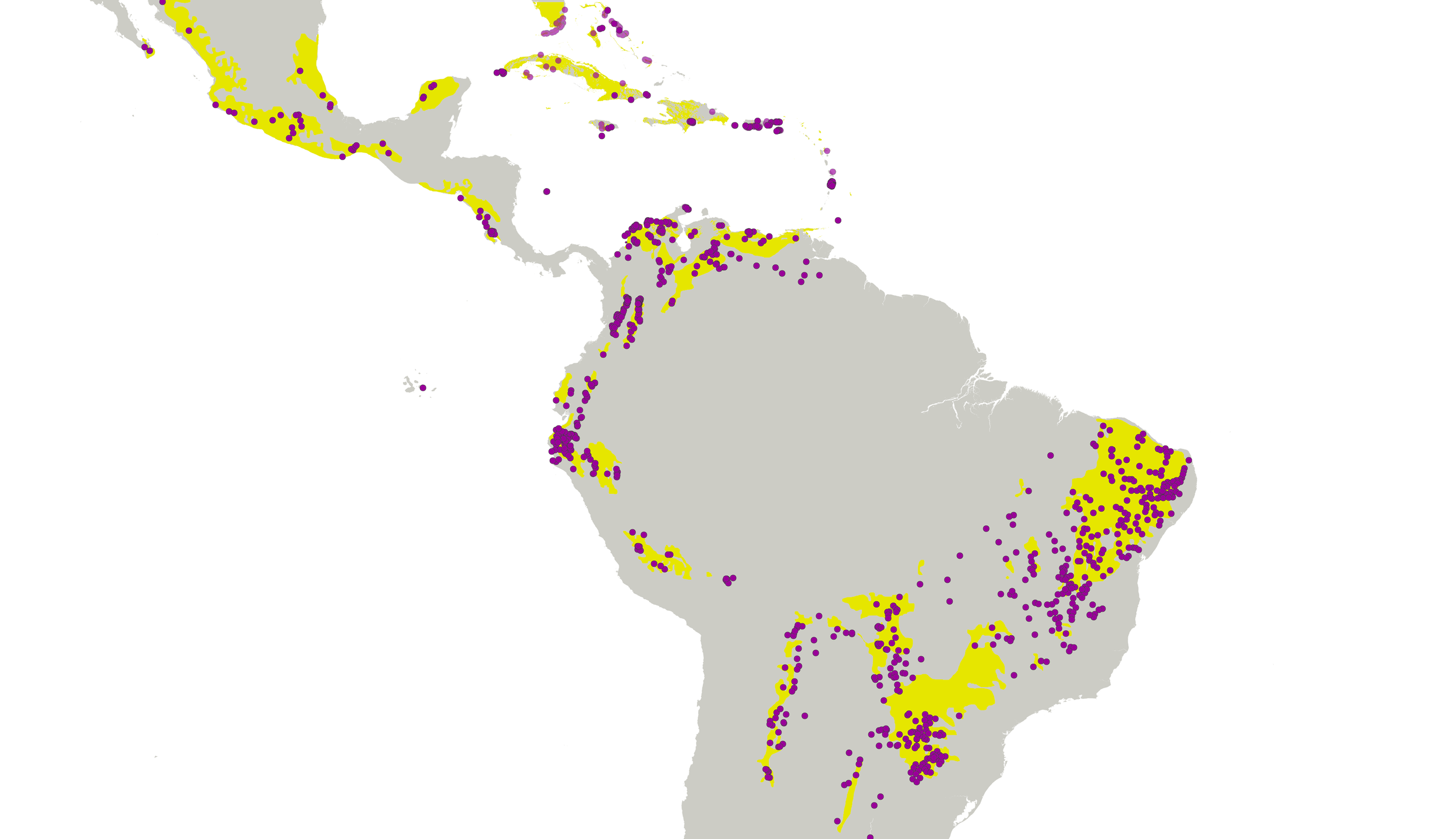
Building on evidence of seed mass patterns in the Caribbean, this project uses new, large-scale data to confirm or challenge Gentry and Janzen’s long-standing observation on the dominance of dispersal syndromes across Neotropical dry forests, and to explore what drives that pattern. The analysis draws on a database of about 5,000 Neotropical dry forest species, with seed mass data for more than half.
-
![]()
4. Seed sampling: cross-institutional collaboration
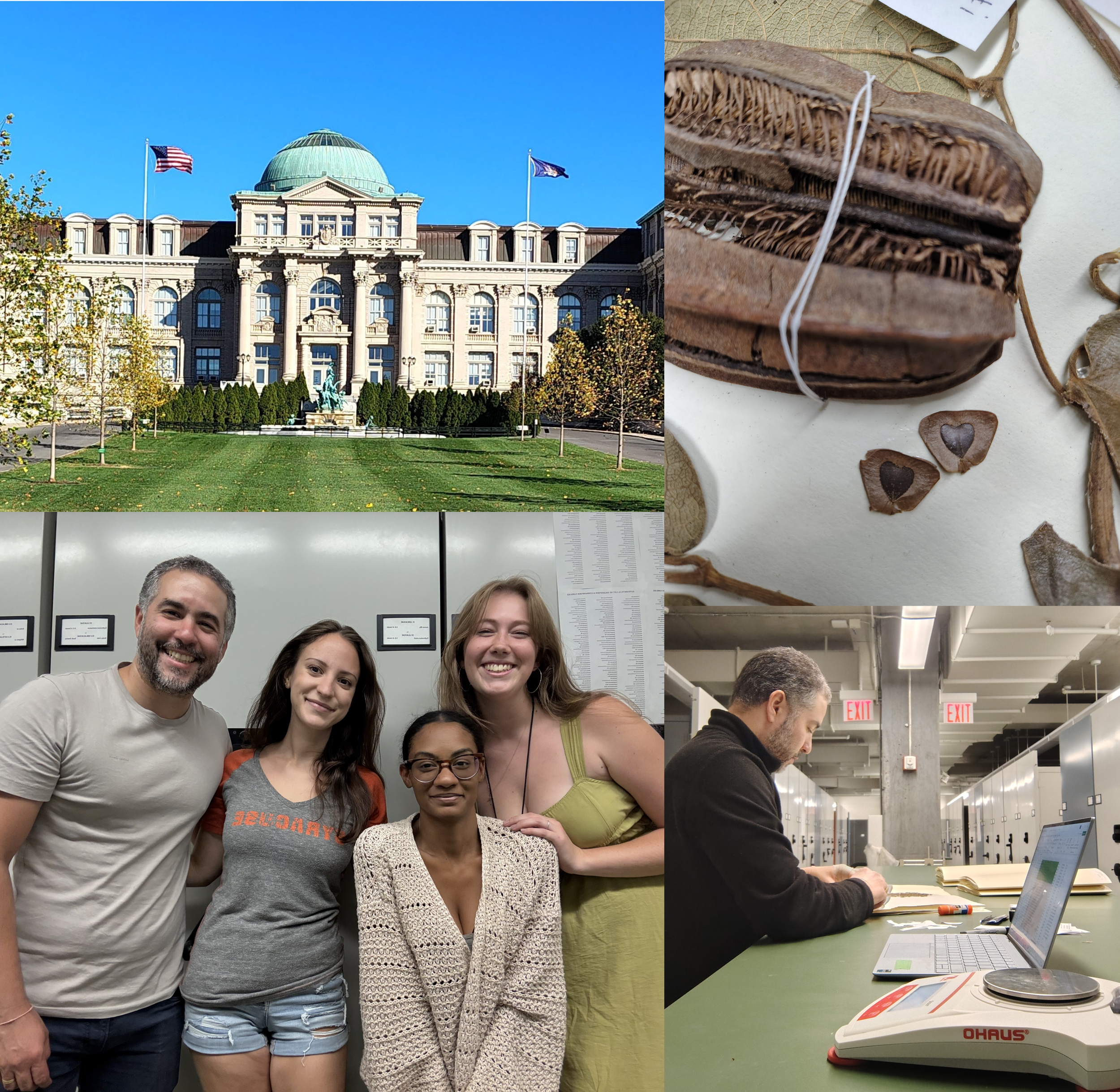
I built collaborations with Dr. Ligia Estela Urrego (Universidad Nacional de Colombia) and Dr. Martin Dovciak (State University of New York) to fill gaps in seed mass data. We sampled seeds at the Universidad de Antioquia herbarium (Medellín, Colombia) and the New York Botanical Garden (NYBG) herbarium. For the NYBG component, I designed and co-led a three-month research internship with Dr. Dovciak, mentoring three undergraduate students in seed mass sampling and as they developed their own projects.
Temporal Variation of Dispersal Mechanism in a Neotropical Dry Forest
This project quantifies the temporal variability of dispersal modes across dry forest succession in the San Emilio ForestGEO plot. Conducted under the direction of Dr. Catherine Hulshof, in collaboration with Dr. Brian Enquist and Dr. Nate Swenson, this research documents an unanticipated dispersal syndrome abundance stability in a successional forest facing climate change. This work intends to disentangle the drivers of this unforeseen successional trajectory. Our findings suggest that vertebrate-dispersed species may face an uphill battle for persistence.
-
![]()
1. Dispersal syndrome stability
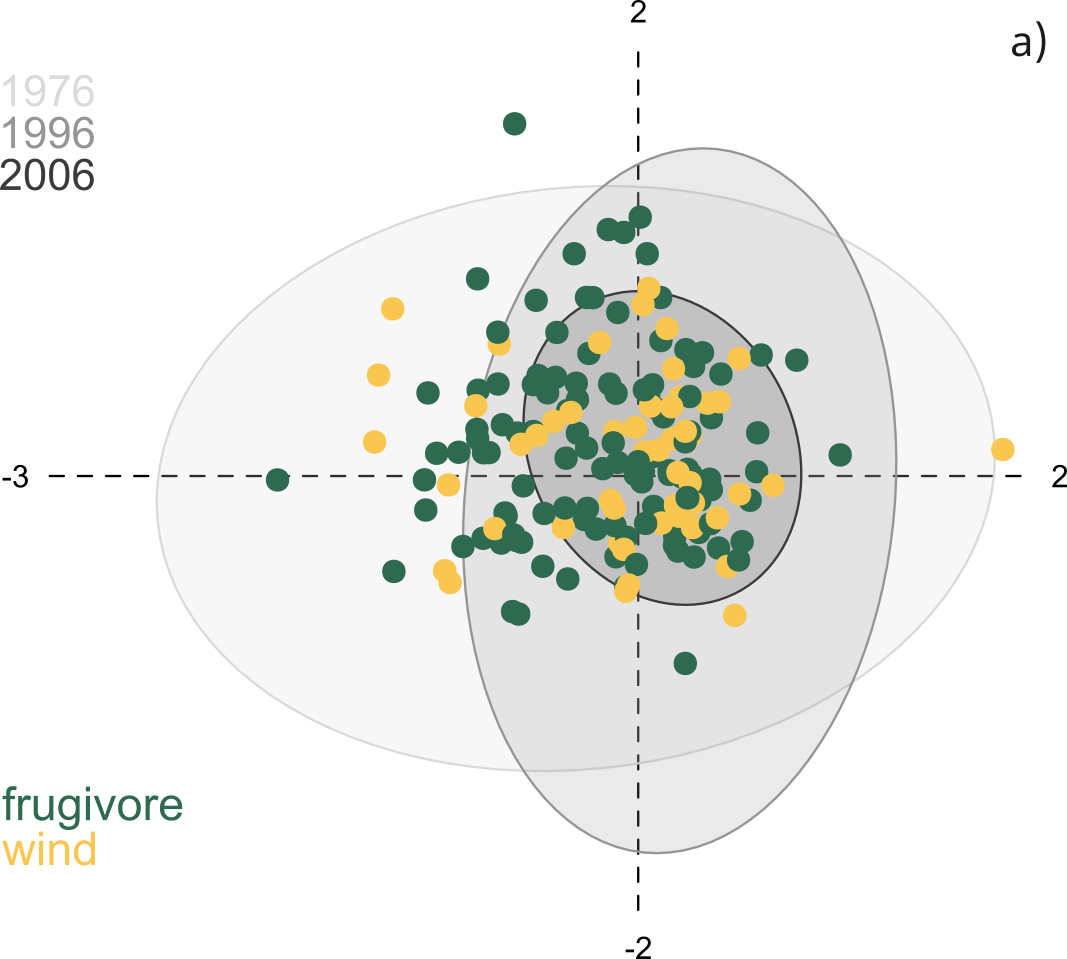
Analysis of the San Emilio plot censuses (1976, 1996, and 2006) revealed an unexpected stability in the abundance of frugivore- and wind-dispersed species over time, suggesting a complex influence of climate change effects on dispersal syndromes dynamics.
-
![]()
2. Beyond patterns
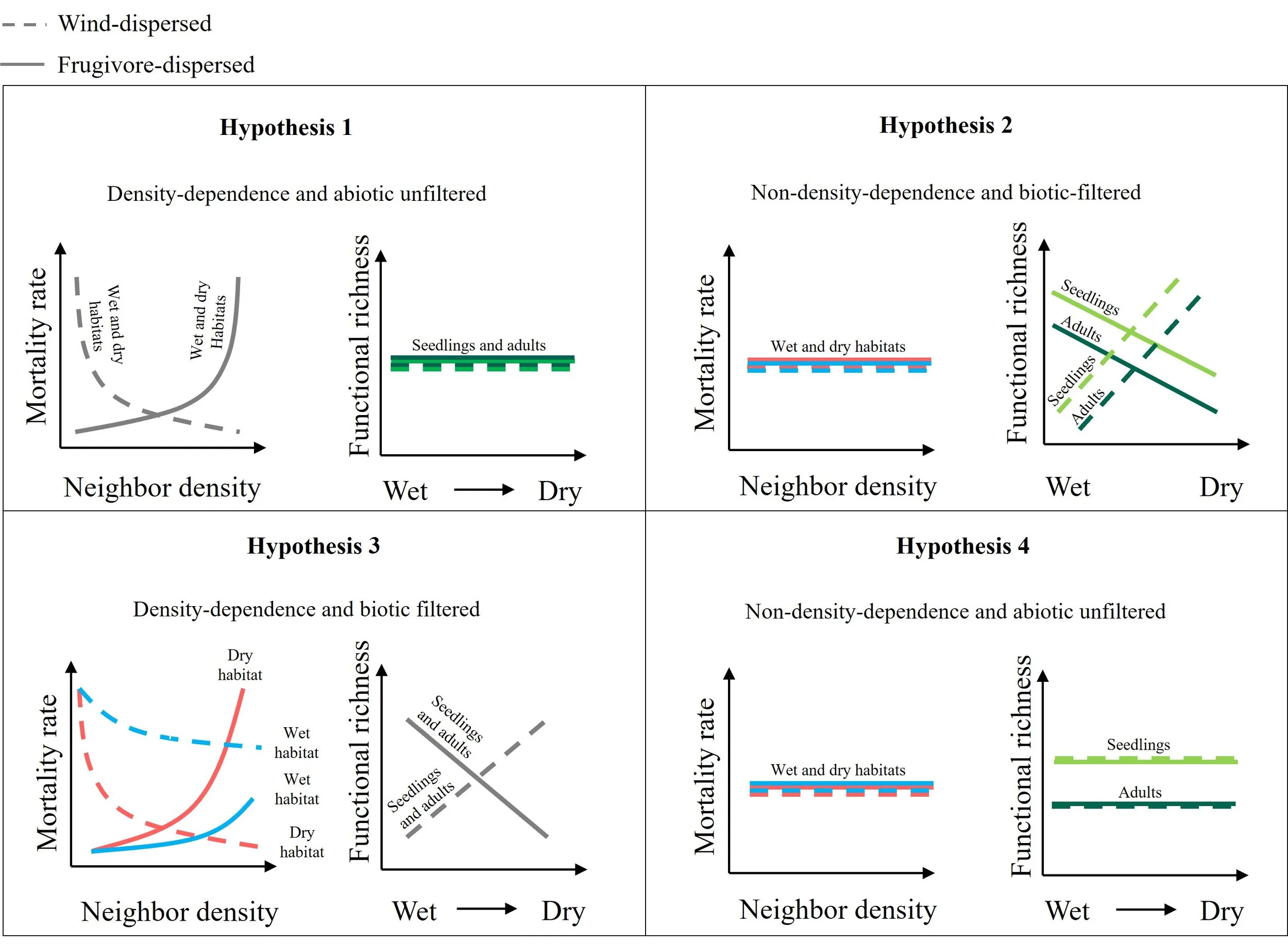
This finding motivates further investigation of the underlying mechanisms. I examine niche partitioning, leveraging functional trait data and density-dependent processes across multiple life stages to explain the observed stability in dispersal syndrome abundances. Explore the infographic.
-
![]()
3. Data sonification: Forestition
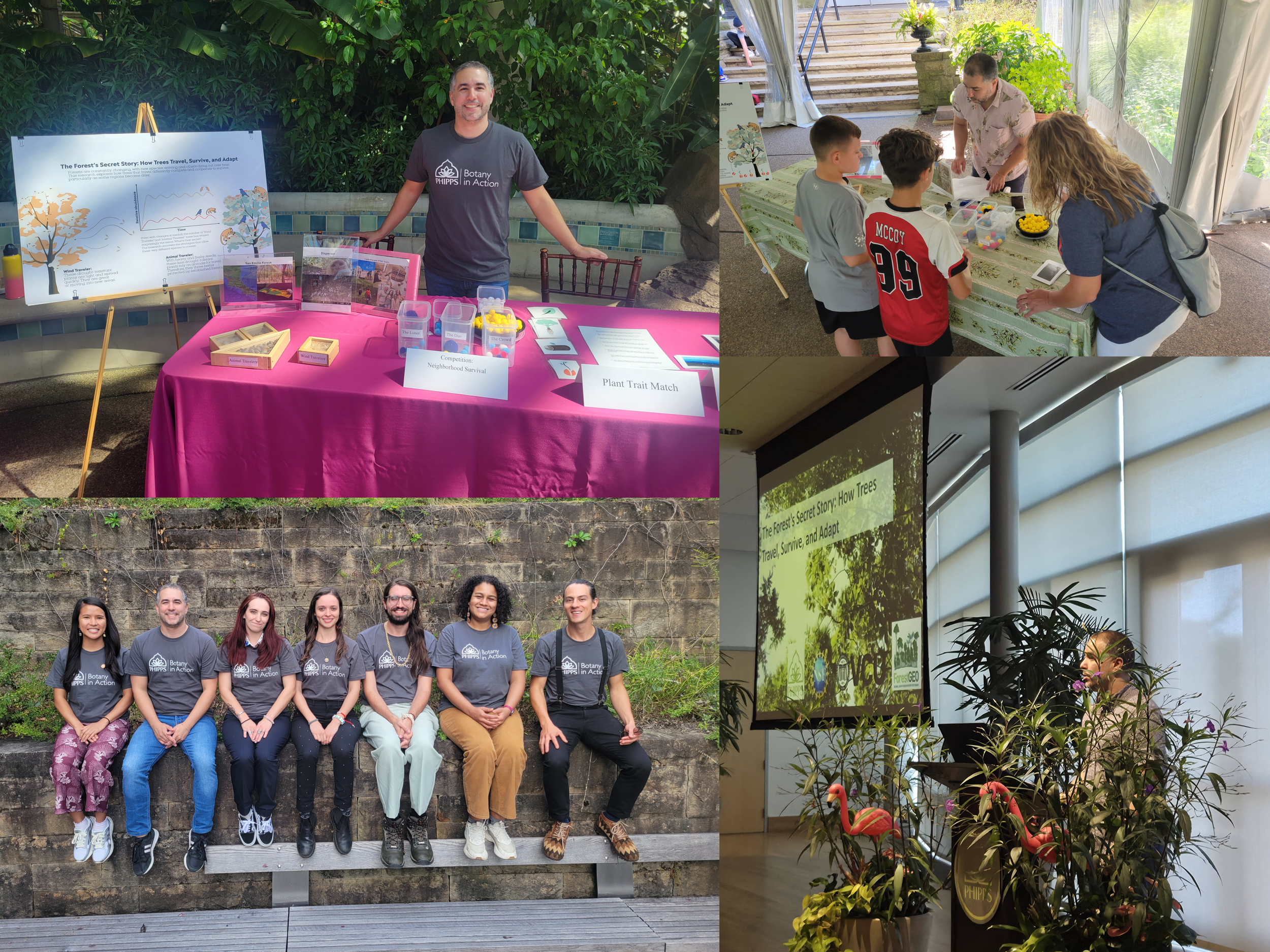
Based on this project, supported by the fellowship Botany In Action from Phipps Conservatory, in collaboration with the sound artist Sara Bouchard, I developed a science outreach program, Forestition. This initiative conveys biological competition as a unifying concept that shapes forest communities. Crucially, Forestition moves beyond the traditional focus on charismatic species, highlighting the need to preserve all species to maintain forest function and diversity.
-
![]()
4. Outreach science
As part of this initiative, the project’s outreach included participation in the Science Outreach workshop at Phipps Conservatory (Pittsburgh, PA), where hands-on science communication activities were developed for diverse audiences outside academia, including children.